
Mining permits and environmental impact in West Sulawesi
Part of Sulawesi: see the island
West Sulawesi (capital Mamuju) has 39 registered mining permits, mainly stone & sand, copper. The mapped area opened and affected by mining covers 0 ha. In 2025, 11,311 ha of tree cover was lost. No environmental bulletins have been published for this province yet.
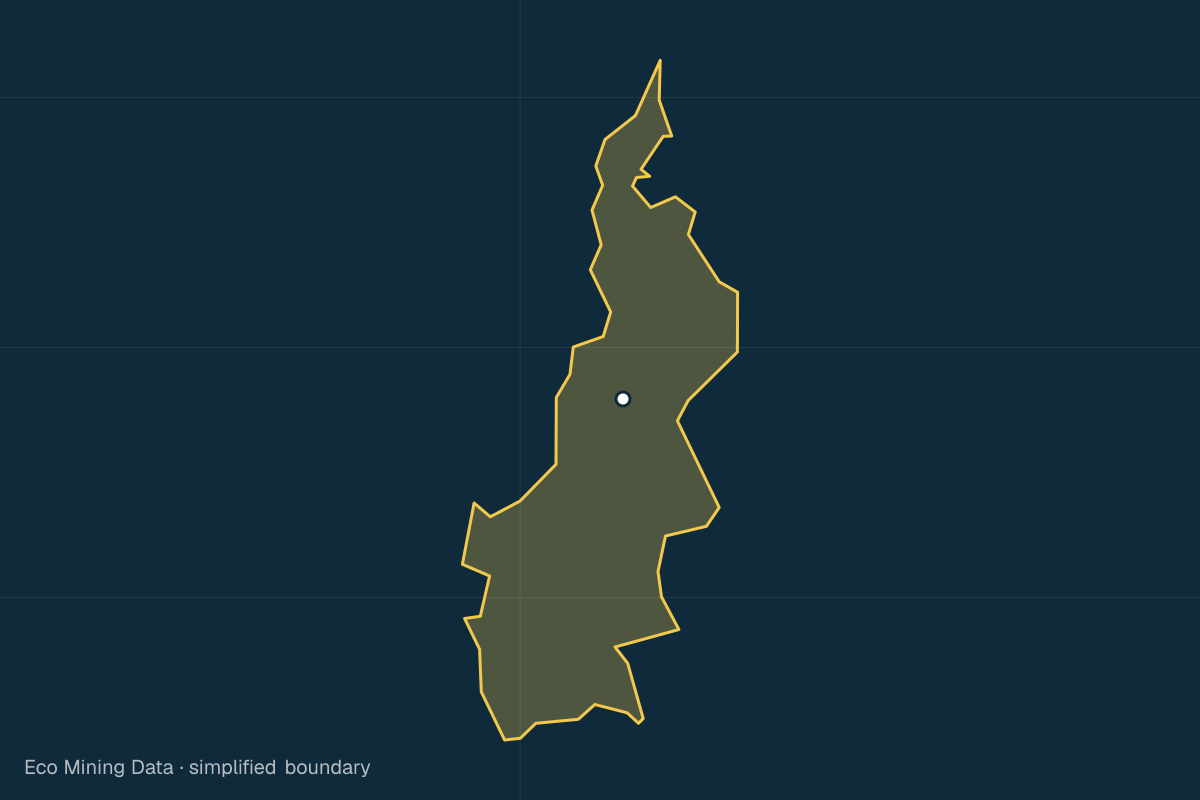
Affected areas cover pollution and physical damage to land, from licensed and unlicensed mining alike.
Permits by commodity
| Commodity | Permits |
|---|---|
| stone & sand | 33 |
| copper | 1 |
| manganese | 1 |
| coal | 1 |
| iron ore | 1 |
| timbal | 1 |
| other | 1 |
Source: ESDM MODI / Geoportal ESDM · Updated 24 Oct 2026
Forest loss per year
| Year | ha |
|---|---|
| 2016 | 13,754 |
| 2017 | 12,637 |
| 2018 | 13,046 |
| 2019 | 13,112 |
| 2020 | 8,560 |
| 2021 | 9,900 |
| 2022 | 10,100 |
| 2023 | 14,784 |
| 2024 | 8,500 |
| 2025 | 11,311 |
Source: Hansen/UMD Global Forest Change (v1.13) · Updated 24 Oct 2026
SDG status
No data yet
Permits by status
A WIUP is an area set aside for permits, not yet a permit. A WPR is a zone for small-scale community mining. Only "active" counts as a permit in the key figures.
Source: ESDM MODI / Geoportal ESDM · Updated 24 Oct 2026
More about this province
- About 91.4 % of the land is forest (tree canopy of at least 30 %, year 2000).
- 5 of 6 regencies and cities have 3 or more active permits.
Source: Hansen/UMD Global Forest Change (v1.13) · Updated 24 Oct 2026
Regencies and cities in West Sulawesi
Pick a regency or city to see mining permits and affected areas at local level.
- Pasangkayu Regency · 11 permits
- Mamuju Regency · 12 permits
- Mamasa Regency
- Polewali Mandar Regency · 7 permits
- Majene Regency · 4 permits
- Mamuju Tengah Regency · 4 permits
Mining history of West Sulawesi
A sourced timeline, as far back as the sources reach. Each point names its source and how certain it is. Where something is only reported or handed down, the limit is shown.
Before 1500
- c. 50 BCE–50 AD
Early Metal Phase on the Karama river
Sakkarra, Karama river, Mamuju · metal objects
At Sakkarra in the Karama valley archaeologists found Metal Phase settlement from about 2,000 years ago. People used metal but kept making polished stone tools.
Limit: There is no evidence of local metal mining or smelting here.
Source: Suryatman et al. (2016) The Sakkarra site: New data on prehistoric occupation from the Metal Phase (2000 BP) along the Karama drainage, West Sulawesi · consulted 24 Oct 2026
- c. 700–800 AD
Submerged iron-working village in Lake Matano
Pulau Ampat, Lake Matano, Luwu Timur · iron
Divers found the remains of an iron-working village on the floor of Lake Matano. Radiocarbon dates show iron ore was smelted here from the 8th century AD. It is the first underwater study of iron production in Asia.
Limit: The date applies to this one site; the scale of production is unknown.
Source: Shinatria Adhityatama; R.R. Triwurjani; Suryatman; David Bulbeck et al. (2022) Pulau Ampat site: A submerged 8th century iron production village in Matano Lake, South Sulawesi, Indonesia. Archaeological Research in Asia · consulted 24 Oct 2026
- c. 1000–1700
Centuries of iron smelting at Nuha and Matano
Nuha and Matano village, Lake Matano, Luwu Timur · iron
The OXIS project excavated smelting debris, tuyères and charcoal at Matano and Nuha in 1998–1999. The lowest layer at Nuha dates to the 11th–13th century, the top to the 17th century or later. Iron was smelted through most of the second millennium AD.
Limit: Radiocarbon dates carry ranges of centuries.
Source: David Bulbeck; Ian Caldwell (2000) Land of Iron: The Historical Archaeology of Luwu and the Cenrana Valley (OXIS project results) · consulted 24 Oct 2026
- c. 1300–1400
Pamor Luwu: iron for the Javanese kris
Lake Matano and Luwu · iron (nickel-bearing laterite ore)
In Java, 'pamor Luwu' is known as the iron used for the patterns in a kris blade. Scholars link it to Lake Matano ore with 1–2 % nickel. The OXIS team concludes that the Matano iron industry existed by the 14th century.
Limit: Whether nickel gave the special quality is disputed: many analysed kris contain little or no nickel.
Source: David Bulbeck; Ian Caldwell (2000) Land of Iron: The Historical Archaeology of Luwu and the Cenrana Valley (OXIS project results) · consulted 24 Oct 2026
- 1365
Luwu named in the Majapahit poem
Luwu (Gulf of Bone) · iron
The Javanese poem Desawarnana (Nagarakertagama) of 1365 lists Luwu among lands under Majapahit influence. It is the oldest written mention of Luwu. Historians see the iron trade as one reason for the link with Java.
Limit: The poem names Luwu, not the iron; the iron-trade link is a scholarly interpretation.
Source: David Bulbeck; Ian Caldwell (2000) Land of Iron: The Historical Archaeology of Luwu and the Cenrana Valley (OXIS project results) · consulted 24 Oct 2026
1500–1799: Portuguese, Spanish and VOC
- c. 1512–1535
Gold from North Sulawesi to Ternate
Siau and the North Sulawesi coast · gold
Soon after 1512 the Portuguese writer Tomé Pires recorded traders from Siau bringing gold to Ternate. The Spaniard Urdaneta (1526–1535) wrote that 'Celebes' sent gold to Maluku every year. These are the oldest written records of gold from the north.
Limit: The sources do not say exactly where the gold was mined.
Source: David Henley (1993) A Superabundance of Centers: Ternate and the Contest for North Sulawesi. Cakalele 4: 39-60 · consulted 24 Oct 2026
- 1667–1700
VOC moves in on Gorontalo gold
Gorontalo · gold
After the Treaty of Bongaya (18 November 1667) the VOC extended its power over areas once under Gowa. Gorontalo came under the VOC governor in Ternate. This began the Company's involvement in gold.
Limit: Specific VOC gold contracts with Gorontalo and Limboto were not checked in the archive.
Source: Hasanuddin Anwar; Retno Sekarningrum; Muhammad Nur Ichsan Azis; Irna Saptaningrum; Hendri Gunawan (2023) Commodities and the Dynamics of Commercial Shipping Activity at Gorontalo in 19th Century. ICLC 2022, ASSEHR 756: 7 · consulted 24 Oct 2026
- 1670–1700
VOC sources on Luwu iron
Luwu and Lake Matano · iron
VOC official Speelman in 1670 was the first European to record iron exports from Luwu. In the same century Rumphius wrote that Matano iron was nearly as good as steel. Until the early 20th century Matano iron tools were traded to Maluku.
Source: David Bulbeck; Ian Caldwell (2000) Land of Iron: The Historical Archaeology of Luwu and the Cenrana Valley (OXIS project results) · consulted 24 Oct 2026
- 1677–1681
North Sulawesi under the VOC
Manado, Minahasa, Sangihe, Gorontalo · gold
Between 1677 and 1681 Sangihe, Minahasa and the peninsula from Gorontalo eastwards came under the VOC. The Company then bought goods such as gold, turtleshell and wax directly from local producers.
Source: David Henley (1993) A Superabundance of Centers: Ternate and the Contest for North Sulawesi. Cakalele 4: 39-60 · consulted 24 Oct 2026
1800–1941: colonial period
- c. 1896–1940
Over 13 tonnes of gold from Paleleh and Totok
Paleleh (Buol) and Ratatotok (Minahasa Tenggara) · gold
The colonial mines of Paleleh and Totok (Ratatotok) together produced over 13 tonnes of gold. It came from quartz lodes and eluvial deposits.
Limit: The figure is a total; no split by mine or year in this source.
Source: S.L. Garwin (1996) The settings and styles of gold mineralization in Southeast Asia. Geological Society of Malaysia, Annual Geological Conference '96 · consulted 24 Oct 2026
- 1909–1910
Geological expedition across Central Celebes
Central and Southeast Sulawesi · nickel; geology
In 1909–1910 mining engineer E.C. Abendanon crossed Central Celebes. His four-volume report (1915–1918) gave the first geological maps of much of the interior.
Limit: Later sources say he found nickel ore at Pomalaa in 1909; this was not checked in the original work.
Source: E.C. Abendanon (1915) Midden-Celebes-Expeditie: geologische en geographische doorkruisingen van Midden-Celebes (1909-1910), 4 vols + atlas, Leiden: E.J. Brill · consulted 24 Oct 2026
- 1924–1941
Buton asphalt found and mined
Kabungka and Lawele, Buton · asphalt
Dutch geologist W.H. Hetzel recorded natural asphalt on Buton in 1924. From 1925 the Boeton Maatschappij mined it until the Japanese occupation in 1942. It was used on roads from 1926.
Source: Awang H. Satyana; Ngakan A. Ascaria; Alfathony Krisnabudhi; Ragil D. Prasetyo (2023) Prospectivities of Buton area, Southeast Sulawesi: new insights from revisiting integrated geological-geophysical-geochemical data. IPA · consulted 24 Oct 2026
- 1934–1941
First nickel mine at Pomalaa
Pomalaa, Kolaka · nickel
In 1934 the Oost-Borneo Maatschappij began nickel exploration at Pomalaa. Mining began in 1938. Ore was exported to Japan until 1942.
Limit: Other sources name a subsidiary (Boni Tolo) and give different years and tonnages.
Source: Wood Mackenzie (2024) Pomalaa nickel operation (report summary) · consulted 24 Oct 2026
1942–1998: war, independence and the New Order
- 1942–1945
Japanese occupation: nickel for the war
Pomalaa, Kolaka · nickel
In 1942 Sumitomo took over the Pomalaa mine and built a nearby smelter. Prisoners of war from Makassar were forced to work in the nickel mines from January to September 1943. The smelter was destroyed in the war.
Source: Stichting Indische Kamparchieven (2024) Celebes - bezetting en bersiap (per regio) · consulted 24 Oct 2026
- 1967
1967 Mining Law and Contracts of Work
Indonesia (national) · all minerals
On 2 December 1967 Law No. 11/1967 on mining was enacted. It allowed Contracts of Work with foreign companies. PT Inco at Sorowako and many gold contracts in North Sulawesi later used this basis.
Source: JDIH BPK RI (1967) UU No. 11 Tahun 1967 tentang Ketentuan-Ketentuan Pokok Pertambangan · consulted 24 Oct 2026
- 1968
Contract of Work for PT Inco
Sorowako, Luwu Timur · nickel
In July 1968 PT International Nickel Indonesia (PT Inco) was founded. It signed a Contract of Work with the government for 30 years from the start of commercial production. It was one of the first large foreign mining contracts after the 1967 Mining Law.
Source: PT Vale Indonesia (2024) Our history in Indonesia · consulted 24 Oct 2026
- 1977–1978
Sorowako smelter starts up
Sorowako, Luwu Timur · nickel
PT Inco built a smelter for nickel matte from laterite ore between 1974 and 1978. President Soeharto inaugurated the plant in 1977. Commercial production began in 1978.
Limit: Sources give 1977 or 1978 as the start year.
Source: Guiry; Dalvi (1987) P.T. INCO's Indonesian nickel project: An updating · consulted 24 Oct 2026
Since 1999: decentralisation to today
- 2007–2012
High natural radiation in Mamuju
Takandeang and Botteng, Mamuju · uranium, thorium
A 2007 BATAN survey found high natural radiation around Mamuju. In 2012 BATAN confirmed uranium and thorium anomalies in three districts. Uranium mining is restricted under the nuclear energy law.
Limit: This is research, not mining.
Source: Kompas.com (2012) Tiga Kecamatan Mamuju Mengandung Uranium · consulted 24 Oct 2026
- 2009
2009 Minerba Law
Indonesia (national) · minerals and coal
On 12 January 2009 Law No. 4/2009 replaced the 1967 mining law. It requires minerals to be processed in Indonesia. This became the basis for the raw-ore export ban.
Source: JDIH BPK RI (2009) UU No. 4 Tahun 2009 tentang Pertambangan Mineral dan Batubara · consulted 24 Oct 2026
- 2014–2020
Raw nickel ore export ban
Indonesia (national) · nickel ore
In January 2014 Indonesia banned exports of unprocessed nickel ore. From 2017 to 2019 low-grade ore could again be exported under conditions. A full ban returned on 1 January 2020; a WTO panel ruled in 2022 that it breaks trade rules.
Limit: Indonesia appealed; the ruling has not taken effect.
Source: World Trade Organization (2022) Indonesia - Measures Relating to Raw Materials (DS592), Report of the Panel · consulted 24 Oct 2026
- 2015
President opens first IMIP smelter
Bahodopi, Morowali · nickel (NPI)
On 29 May 2015 President Joko Widodo inaugurated the first nickel smelter at IMIP. Since 2016 the park has been a National Strategic Project. It grew into one of the world's largest nickel and stainless-steel complexes.
Source: PT IMIP (2024) FAQ - PT Indonesia Morowali Industrial Park · consulted 24 Oct 2026
- 2017
Indonesia ratifies the Minamata Convention
Indonesia (national) · mercury
With Law No. 11/2017 Indonesia ratified the Minamata Convention on Mercury. It asks countries to reduce mercury in small-scale gold mining. This affects many gold areas in Sulawesi.
Source: JDIH BPK RI (2017) UU No. 11 Tahun 2017 tentang Pengesahan Minamata Convention on Mercury · consulted 24 Oct 2026
- 2024–2025
River sand for the new capital
Lariang and Benggaulu river mouths, Pasangkayu and Mamuju Tengah · sand
Journalists describe sand mining at river mouths in West Sulawesi for building the new capital (IKN) in Kalimantan. Residents report coastal erosion and damage to their land.
Limit: The IKN link rests on residents' and NGO statements.
Source: Project Multatuli (2025) Lariang Terluka: Derita Warga Muara Sungai Demi Tambang Pasir IKN · consulted 24 Oct 2026
- 2025
138 sand and rock permits
Mamuju, Mamuju Tengah, Pasangkayu, Polewali Mandar, Majene, Mamasa · sand, rock
In July 2025 West Sulawesi's mining office counted 138 sand and rock permits in six regencies, most in Mamuju (46). Farmers and fishers opposed them; by March 2025, 21 residents had been reported to or held by police.
Source: Mongabay Indonesia (2025) Opini: Karut Marut Kelola Tambang Pasir di Sulawesi Barat · consulted 24 Oct 2026
- 2025
Protest at governor's office against sand mining
Mamuju · sand
In May 2025 residents protested at the governor's office in Mamuju against sand mines. They demanded permits be revoked and prior community consent.
Source: Mongabay Indonesia (2025) Tolak Tambang Pasir, Warga Protes ke Gubernur Sulbar · consulted 24 Oct 2026
- 2025–2026
Crackdown on illegal gold mining in Mamuju
Kalumpang and Bonehau, Mamuju · gold
In December 2025 a joint team sealed illegal gold mines in Kalumpang. In July 2026 police named four suspects for illegal gold mining at three sites in Kalumpang and Bonehau, including a provincial civil servant.
Source: ANTARA News (2026) Polresta Mamuju tetapkan empat tersangka tambang emas ilegal · consulted 24 Oct 2026
Available with a free account
These details are visible after signing in. Only the type and count are shown here.
- Permit holders39 Locked
- Environmental alerts2 Locked
- Impact assessments0 Locked